Places and People
-
Tower Cottage
Believed to be a summer home of the Wilde’s
-
The Esplande Hotel
Built in 1897
-
The Coastguard Boathouse
Built in 1870 and transferred from the Admiralty to B.U.D.C. in 1904
-
New Coastguard Station
Built in 1876, occupied by the Free State Army in 1922 and converted to a private dwelling in 1925
-
Richard Power
1928-1970 lived in a house in Convent Avenue called Ravenna. He was the author of ‘The Hungry Grass’ and ‘The Land of Youth’
-
Milward Terrace
Was the home of Joshua Pim, a Dublin doctor and Irish and Wimbledon Tennis Champion in 1893 and 94. Roddy Connolly (1901-1980) son of 1916 leader James Connolly also lived in this terrace. He was an organiser of the Communist Party of Ireland, the editor of The Workers Republic and a member of D�il �ireann for County Louth (1943-45). He later became chairman of the Irish Labour Party
-
Aravon School
Opened 1862 as Bray School and moved to this location in 1866 when it was then renamed Aravon School. Moved again in 1984 to Ferndale Road in Rathmichael. Among its pupils were the dramatist John Millington Synge (1871-1909) author of ‘Riders to the Sea’ and ‘Playboy of the Western World’ which is widely regarded as the most important play of the Irish literary revival. Also Sir Roger Casement (1864-1916) patriot and humanitarian, who was executed for treason in August 1916. The author Monk Gibbon taught here for a while
-
Philip Rooney
Author of ‘Captain Boycott’ a novel which was made into a film starring Stewart Granger and Cecil Parker
-
Paul Henry
(1876-1958) Born in Belfast, he was a founder of the Dublin Society of Painters in 1920
-
Cearbhall O’Dalaigh
(1911-1978) Was Attorney General on two occasions 1946-48 and 1951-53. He was Chief Justice in 1961 and President from 1974 to 1976
-
James Plunkett Kelly
Was the author of ‘Strumpet City’ and ‘Farewell Companions’
-
Sir Herbert Hamilton Harty
At one time the organist at Christ Church, Bray. He was a musician, conductor and composer. His works include ‘Comedy Overture’ in 1907 and ‘Irish Symphony’ in 1910
-
Cyril Cusack
Starred in many films including ‘Odd Man Out’, ‘Shake Hands with the Devil’, ‘Fahrenheit 451’ and ‘My Left Foot’
-
William Larminie
1849-1900 Poet and folklorist was the author of ‘West Irish Folk Tales and Romances’
-
Captain Albert Bestic
Was Third Officer on the ‘Lusitania’ and the author of ‘Kicking Canvas’
-
Sir Arthur Purves Phayne
(1812�1885) Commissioner of Arkan in 1837, Commissioner of Lower Burma in 1852 and Governor of Mauritius in 1874
-
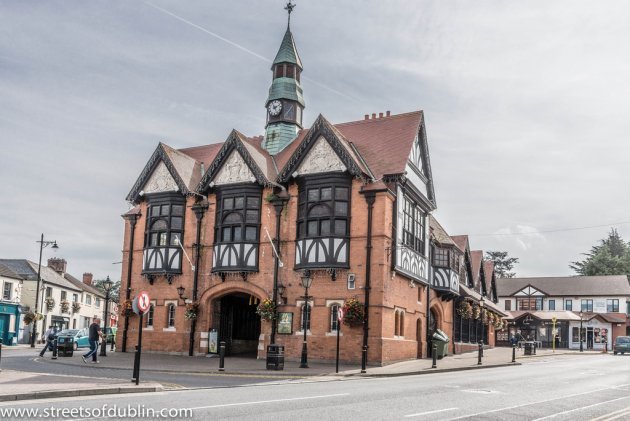
Bray Town Hall
Built in 1881/82 in the English Revival style. The architects were Thomas Deane & Sons and the builders were Wardop & Sons.
-
The Cross on Bray Head
Built in 1950 to commemorate the Holy Year
-
Bray Court House
Built in 1841. It closed as a courthouse in 1984 and now houses the Tourist Information Office and Heritage Centre
-
The Royal Hotel
Opened in 1776 as the Meath Arms
-
Bray (Daly) Railway Station
Opened in 1854, no. 2 Platform was built in 1927
-
Kilruddery House
Acquired by Sir William Brabazon in 1618 and has been home of the Earls of Meath ever since. (Open to the public)
-
Sunnybank
Originally known as ‘Bloody Bank’. It was the site of a battle between the citizens of Dublin, led by the Lord Mayor against the O’Byrne and O’Toole clans
-
The Petrified Forest
Submerged on Bray’s North Beach lies the remains of a forest over 6,000 years old, it can only be seen at very low tides
-
St. Patrick’s National School
Located on Convent Hill. This premises started life in 1892 as The Royal Drummond Institute for Girls. In 1917 it became a home for blind soldiers and in 1918 it was The Duke of Connaught’s Hospital for fitting artificial limbs. It then became an orphanage for the daughters of dead soldiers. It was bought by the Loreto order in 1944 and became a national school